User login

Alerts

Warning if you are running Biodiesel

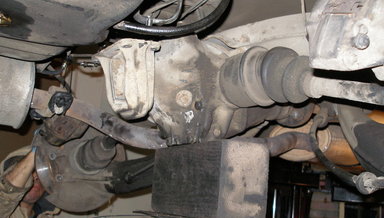
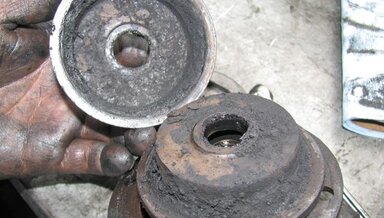
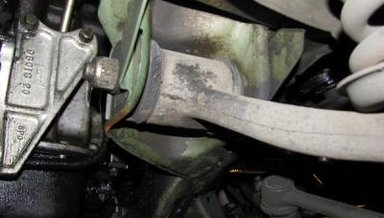
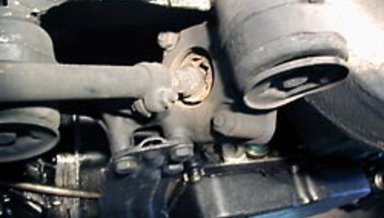
If you are running straight biodiesel or any mix above B20 be very very careful not to spill or let it leak on any rubber parts. This includes motor mounts, front suspension rubber, radiator and coolant hoses, etc. It LOVES to eat rubber. Take a look at this motor mount removed from a 300SD. The owner had a leaking hand primer pump. So when he changed his filters he would pump fuel onto the motor mount. This happened in less that a year!!!
Why does it seem like no one inspects the voltage regulator!

I see this on EVERY car I get - even ones that have been "dealer maintained!" I just amazes me that this does not get inspected and changed. When it fails it will leave you stranded- I know first hand - so now I always carry a spare in my trunk... :-)

Removal is a simple matter of removing two screws. Look what I found today when I removed the regulator on my newly acquired 300SDL. Notice how short the brushes are. It would have not taken long for this alternator to stop charging altogether. 

1985 Turbo Diesel Engine Identification with Trap Oxidizer

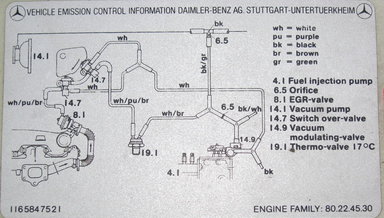
If you are new to Mercedes Diesels and own a 1985 model 300D 300TD 300CD or 300SD you may often get asked the question if your engine has a trap oxidizer. This will come up when you try to order parts. We thought it would be helpful to show and explain the difference. Not all 85 models had a trap - even some early 1984 California models did! The EASIEST way to identify this model is by the location of the air filter housing. As you can see in the first picture the air filter assembly is mounted off the engine and up behind the right headlight.

Old Benz Owners - Keep an Eye on the Front Wheels

I have been working on the 1966 230 that we just received. After removing the hubcaps and beauty rings I came across something very puzzling on the right front wheel. As you can see in the picture it is just covered in grease. At first I could not figure out how that could have happened. After further diagnosis the cause became obvious. Any one want to venture a guess as to what REALLY caused this??

I ran a little contest on this website. A number of customers wrote in with an answer.  Only two had the single correct answer. 

THE ANSWER:

123 and 126 Chassis Front Torsion Bar Alert !!!

This problem is becoming increasingly more common as these cars age. If the torsion bar breaks at high speed it can be very dangerous! All the failures I have seen so far have been on rusty cars (those cars from the midwest and east where they salt the roads). That is not to say I can not happen on a non-rusty front end. If you have not inspected your front end recently, my recommendation is that you do so immediately. If the ends of the torsion bar at the top of your front suspension show signs of rust or wear due to loose rubber bushings - then take it into a good front end shop and have them remove the torsion bar from the upper control arm and inspect it carefully.

Running Waste Vegetable Oil? Dont Believe the Myth.

Like everyone else involved in running SVO / WVO, I love driving on free fuel. This was especially intoxicating when diesel fuel prices were approaching $5.00 a gallon. But contrary to what you may hear on some forums there is no free lunch. There is a maintenance price to pay. In fact, there are a few common myths surrounding this subject which I really think need to be brought into the light. Chief among them is the belief that if you can just get the temperature of the oil hot enough before it is injected into the combustion chamber - then all is well - and you will have no problems.... The trouble is no matter how hot you get the oil you can not expect all the glycerin in the oil to burn in the combustion chamber.

Timing is Everything!

Timing chains have been used on Mercedes engines since the early 1950's. My 1953 220 has an overhead cam six that is driven by a twin row chain - similar to engines well into the 1990's. Timing chains may be old technology, but they are proven and they work for long periods of time (provided the engine receives proper service).

WARNING: Timing chain failure is the NO. 1 cause of catastrophic engine failure in these old engines. If it lets go the valves will hit the pistons. If it comes off at high speed, the pistons can be damaged and the camshaft can driven right out through the valve cover!

CAUSES: There are a number of reasons for excessive chain stretch / chain failure. 

Diesel Engine Front Crank Bolt Failure and Loss of Pulleys

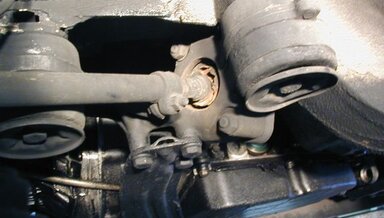
his one is becoming more common than I would like to admit. It even happened to my daughter Kaias 300 TD wagon. The old 616 and 617 diesel engines produce a lot of shake and vibration and over time that can loosen the front crank bolt. Hard to believe since that big bolt it torqued to over 250 ft. pounds. If caught early enough you can save yourself a lot of grief. If it happens on the freeway (as it did with Kaia) the pulleys can fly off- you will immediately lose your power steering, the dash warning lights will come on and the engine will start to overheat! I would recommend you check the tightness of this bolt at your next service. Certainly check it at the first sign of any strange front engine clicking or clanking noise. Ignore this and I guarantee you will be sorry.

123 Chassis Oil Pressure Guage Leak - Watch for it!

This one is very common and becomming more so as these mechanical oil pressure guages age. When the gauge starts to leak behind the instrument cluster it may take a while for you to notice. (ie - dark black engine oil dripping on your foot). The leak usually starts out as a slow seepage and if you catch it early enough it won't make a such mess. Watch for signs of oil dampness on the underdash panel and in and around the bottom of the instrument cluster. I have found no easy way to fix a leaking pressure guage. You could spend a lot of time messing with it and never get the leak stopped permanently. It some cases it would even require soldering and guess how fun that is when you have oil inside the unit.

201 and 124 Chassis Flex Disk Alert

Bad 300E flex disk
190E Flex Disk with torn bushing mounts
DRIVELINE FLEX DISK DETERIORATION ON LATER MODELS:

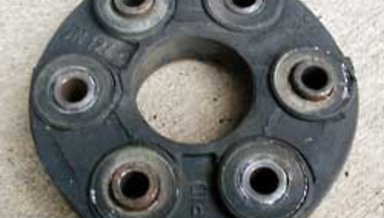
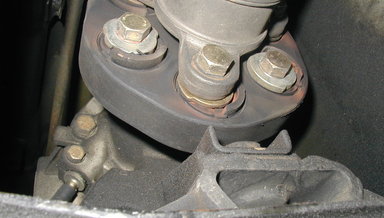
The newer flex disks on the 201 and 124 chassis are designed a little different from those found on earlier models. They do not have the same tendency for catastrophic failure, but they are prone to other problems like clicking noises and drive line vibrations. This is becomming a very common problem as these cars get older. Failure has proven to have more to do with age than vehicle mileage. Just recently I had a 1987 190E come into the shop with only 80,000 original miles and the front flex disk was totally shot. 

Early Flex Disk Failure

Flex disc failure
New flex disc

I am seeing a lot of flex disk failures on the 70s and 80s daily driver 114, 115, 116, 107. 123 and 126 chassis. The disk that usually fails is the front one, and when it does the front short section of the drive line flings around under the car and causes other damage in its wake.

Automatic Transmission Shift Bushing...

Automatic Transmission Shift Bushing

If the floor shifter in your Mercedes with automatic transmission feels loose or clunks when you shift it, I will warn you that you had better take care of it now! I have seen two instances where Mercedes owners have left their cars in park only to come back and discover they have rolled away (accidentally come out of park). In one instance a nice 300CD coupe rolled down a hill and into a tree. It can also be difficult to know exactly what gear you are in. I have come up with a clever press to allow you to replace these yourself.

Click Here to view our kit for repairing this problem. 

126 Chassis Front End Support Rod Joint Failure

126 Support Rod
126 rod joint

If your 126 sedan or SEC coupe is making front end clunking noises when you brake or go over bumps at slow speed you most likely need to replace the bushings where the lower front suspension guide rod attaches to a body sub frame casting. The purpose of the rod is to prevent the front suspension from moving aft under heavy braking.

The purpose of the rubber bushing is to isolate vibration and road noise from the suspension attached to this rod. When the ball joint inside the bushing starts to wear out you will begin to hear that common "clunking" sound. If has seen this condition quite often on 126 chassis Mercedes, even on cars with less than 150,000 miles. This part seems to be one of the first to wear on the front suspension of these cars.

Power Steering Filter Replacement...

Power Steering Filter Replacement

Many 123 and 126 chassis owners don't know there is a filter inside the Power Steering pump reservoir. Consequently this filter never gets changed and when it starts to become plugged your power steering may become sluggish or squeals and may even damage the pump or steering box. Change the filter and fluid now for longer life and better performance. Check out our kit by clicking on the picture.

Click Here to view this part

Rear End Clunking Noises

Rear End Clunking Noises

On most Mercedes from the early 70's up to the late 80's (including 114 115, 116, 107, 123, and 126 chassis cars) with independent rear suspension it is not uncommon to hear clunking noises under the back of the car while you are driving. Sometimes finding these clunking noises can literally drive you nuts. Do not just throw parts at the noise until you actually find the cause. There are a number of things that can cause clunking around the rear end while you are driving, but one of the most common is a worn ball socket in the one of the sway bar links that attaches to the outer hub on each side of the rear end. Upon a casual inspection you may not see the wear in these links and of course if it's under tension you will may be able to feel it either.

Diesel Engine Camshaft Failure

Diesel Engine Camshaft Failure

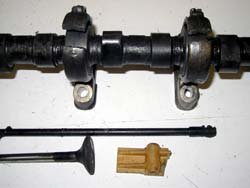
As the 616 and 617 diesel engines age, I am seeing an increasing number of worn out camshafts coming into our shop. In my humble opinion the cause of this is usually due to lack of frequent oil changes. Excessive valve clearance may also be a contributing element to the problem. It all begins with minor scoring of the cam lobes. Then over time the wear increases to scoring on the rocker arm and eventually the cam tip itself will wear to a sharp point. As this happens you will notice a gradual loss of power and the engine will begin to smoke more.

Plastic Radiator Neck Failure

Since the plastic tank radiators of the 80's are notorious for breaking off their plastic necks (can ruin your day and your engine!) it is best just to replace the old radiator with new or reinforce the top neck of your current radiator.

Silicone Gasket Adhesive Alert

Silicone gasket adhesive

For those of you who are not already aware of this potential for trouble, my recommendation is that you do not under any circumstances use any type of silicone gasket adhesive on any part of your engine whether diesel or gasoline. I cannot express my dismay at how many times I have seen silicone particles running loose inside an engine. It can often lead to major engine damage. In the pictures here someone had used a silicone gasket sealer on this 380SL engine. When I removed the cylinder head I found this big clump of blue silicone actually plugging one of the passages in the engine block. I've seen silicone gum up climate control units, plug cooling systems and even plug up oil passages inside engines which all can lead to catastrophic failure.

Timing Chain

If you lose your timing chain you will destroy your engine. The pistons will come up and hit the valves and at speed can push the camshaft(s) right through the valve cover(s). There is no set recommended mileage at which you should change it.

Transmission cooler lines on Diesels with Automatic Transmissions

Transmission cooler lines 1
Transmission cooler lines 2
Transmission cooler lines 3

Like many things on the diesel engine, the transmission cooler lines are subject to much vibration. The clamps that support them along each side of the engine pan have plastic inserts that prevent chaffing. Over time these plastic inserts break out and all you have left is a metal clamp rubbing against the aluminum tubing.

On a number of occasions I have seen these clamps wear right through the tubing thus depositing your transmission fluid on the road as you drive. Check your lines soon. A good preventative repair is to take the clamps off and cut 8 mm rubber fuel line to make new soft inserts. Slit the short pieces of hose lengthwise to fit them over the tubing. Re-clamp the lines and you will not have to worry about them again.

Oil cooler lines on older diesels (especially 616 and 617)

Along with radiator neck failure, the rupture of one of the large oil cooler lines on your diesel engine can easily ruin your engine. When one of these lines goes you can lose all your engine oil in just a few minutes. If you are driving and not watching your oil pressure gauge you can destroy the engine bearings in short order.

Sticky Throttle Linkage

Sticky Throttle Linkage
Adjusting throttle linkage

In the last few weeks we have seen two instances where the throttle has stuck open on 123 diesels. This can be very scarey and you may need to have the where-with-all to turn the engine off while driving to keep the engine from over revving. This can make is hard to steer and brake! In most cases you can put your toe under the throttle pedal and pull it back. Best to just prevent it from happening in the first place.

The problem is most often caused by corrosion on the throttle linkages at or around the engine valve cover. When the linkage balls and or lever posts corrode they can stick and prevent the throttle from returning to idle.

Torn Mono-valve Diaphragm (Heater Control Unit)

Torn Mono-valve Diaphragm

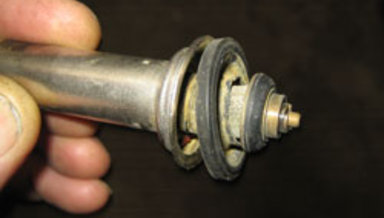
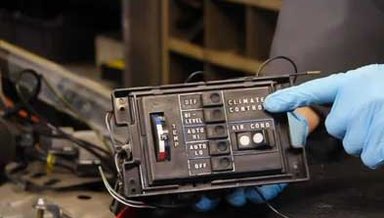
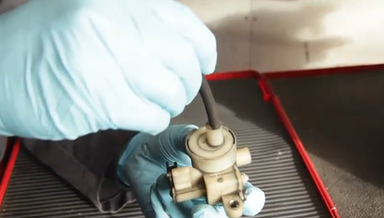
If you own a 1981 to 1991 123, 107 or 126 chassis and have not heard about the mono-valve then this alert should be a real help. This little valve controls the amount of hot water going into your heater core. The seal for the valve is made of rubber. With age this rubber splits and will cause your heater to go wacky. It will generally get hot when you want it to be cold and in some cases it acts like it has a mind of its own. Failure of the mono-valve has often led to some big repair bills for the unknowing. This part is very inexpensive, can easily be replaced by yourself, and in 7 out of 10 cases will most likely solve you sporadic heat problems.

Click Here to view this part

Brake Booster Failure: Don't be hasty to buy a new one

Brake booster failure 1
Brake booster failure 2
Brake booster failure 3

We have seen or heard of enough unecessary brake booster replacements recently that we decided it was time to put up an alert for our customers. If you have been experiencing a hard-to-press brake pedal and have checked your vacuum source or vacuum pump output - DO NOT assume or let your mechanic tell you you just need a new brake booster. These are very expensive new. You want to be sure that is your problem BEFORE you spend your hard earned money!

WARNING:

DO NOT BUY A REPLACEMENT BRAKE BOOSTER UNTIL YOU HAVE CHANGED THE O-RING SEAL BETWEEN THE BOOSTER HOUSING AND THE BRAKE MASTER CYLINDER.

Fuel Tank Filter Screen Alert

Fuel tank filter screen

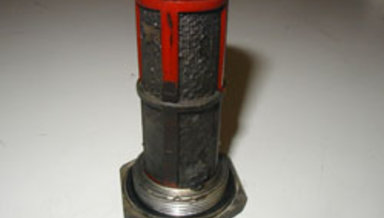
If you have been experiencing hard starts and poor power with your 1986 and older Mercedes Diesel you may have a plugged filter screen in your fuel tank. Yes that is right - you do have another filter back there. If you have had all your filters recently replaced and are still experiencing performance problems, be sure to inspect this filter or have your mechanic do it.

Voltage Regulator Failure...

Voltage Regulator Failure...

Here is one that will leave you stranded with a dead battery. I like to call this "run insurance". The only time in my life when I have been stranded on the freeway with a dead car was when the voltage regulator went out in my 1986 230E. The brushes wore down to a point where they were making enough contact to not have the dash warning light come on, but not good enough to keep the battery charged. When the voltage got low enough in the battery the ignition system shut down and the car quit dead going 70 mph.

Loose Alternator Belt on 1970's Models

1970's alternator belt bolt

Mercedes used a unique and clever way to adjust alternator belt tension during most of the mid to late 1970's. This covers 123 240D, 300D, 300CD 1977 to 1979. The head of the outboard mounting bolt actually has teeth machined into it. When you turn the head of the bolt either direction it will move the alternator in or out to loosen or tighten the v-belt tension.

This works great as long as the adjustment procedure is done properly and apparently more often than not it is done incorrectly. You must loosen ALL three bolts holding the alternator to the engine BEFORE turning this adjusting heat. If not you will strip off the teeth as you can see in this picture. Once these teeth strip you will have a very hard time getting your alternator belt tight enough.

Power Window Wiring Failure notice

Power window wiring failure 3

This problem is starting to show up more often as all these old Mercedes age. So I thought it was a good time to post it on our website. This will give you a clue as to what might be happening with your power windows especially if they are showing weird signs or intermitted operation. The problem occurs after countless hundreds of times of opening and closing the door the wiring bundle that goes from the door into the door post will become brittle and the wires will actually break. When the wires break they may only make contact especially when the door is closed. You may find when the door is open your window wont go up and down. Worse yet I've seen these wires on some occasions start cross connecting and blowing fuses. What makes this most frustrating is it can be very intermitted.

Diesel Engine Transmission Torque Converter Flex Plate Failure

Flex plate alert

The center of this spring steel flex plate is bolted to the rear crank shaft flange. The outer perimeter of the plate is attached by six bolts directly to the torque converter which in turn drives the transmission input shaft. Although similar flex plates are used on gas engined Mercedes the flex plate problems I have seen have always been mounted to diesel engines. I believe the reason for this is due to the higher vibration levels and the harsher compression kick inherit in the diesel engine.

O.E. Aluminum Fuse Failure...

Fuse Kit

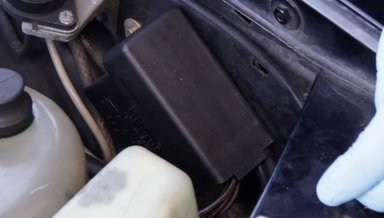
This is a very simple thing that can lead to more frustration that high expense. Have you been having some weird electrical problems in your older Mercedes? Maybe you have taken the fuse box cover off and wiggled a few fuses and it has solved the problem for a while. You probably noticed corrosion on the tips of the old aluminum fuses. Who ever designed these old fuses did not get a good education in dissimilar metal corrosion... You don't put aluminum up next to copper - add in moisture and heat and expect to not have corrosion problems.